Flying a drone after sunset can open up new possibilities for aerial photography, FPV flying and low-light filming, but night operations also make visibility, orientation and preparation much more important.
The right drone light can make your aircraft easier to see, help you understand its orientation and support the lighting requirements that apply to some types of night flying.
This guide compares seven anti-collision strobes and visibility lights for different types of drones. We look at visibility, weight, mounting, battery life and practical use, while also explaining some important differences between UK and US night-flying requirements.
Important: Drone regulations can change and requirements depend on where and how you fly. Always check the current rules that apply to your operation before take-off.
Why Use Drone Lights for Night Flying?
Drone lighting can serve several different purposes. Understanding those differences will help you choose the right type of light rather than simply buying the brightest option available.
- Visibility: A clearly visible light can make it easier to keep track of your drone in low-light conditions.
- Orientation: Different colours or positions can help you identify which direction the aircraft is facing.
- Anti-collision lighting: Some operations require lighting intended to make the aircraft visible to others.
- Creative flying: RGB and coloured LED systems can add visual effects to FPV, freestyle and photography flights.
Lighting does not replace the need to maintain Visual Line of Sight where that requirement applies. A bright light may help you see the aircraft, but the pilot remains responsible for conducting the flight safely and within the applicable rules.
UK and US Night-Flying Rules: What Drone Pilots Should Know
Flying at Night in the UK
For night operations in the UK Open Category, a green flashing light must be activated on the unmanned aircraft. The light needs to remain active during the flight.
The UK Civil Aviation Authority does not specify a universal minimum brightness, flash frequency, visibility angle or illumination range for this Open Category requirement. The remote pilot is responsible for fitting the light securely, keeping it visible from the ground and making sure its position does not adversely affect safe operation.
Remember that an aftermarket light adds to the total mass of the aircraft. This can be particularly important with lightweight drones close to a regulatory weight threshold.
Flying at Night in the United States
US requirements depend on the type of operation.
For flights conducted under FAA Part 107, the drone must use anti-collision lighting that is visible for at least three statute miles and has a flash rate sufficient to help avoid a collision.
Recreational flyers operate under a different framework and should follow the applicable FAA requirements together with the night procedures contained in the safety guidelines of a recognised Community Based Organization.
This distinction matters because a colourful LED accessory or orientation light should not automatically be assumed to satisfy every regulatory requirement.
How to Choose the Best Drone Light for Night Flying
Before choosing a strobe or LED system, consider how the light will actually be used on your aircraft.
Visibility and Intended Use
Do not judge a drone light from lumen figures alone. Consider whether you need a regulatory anti-collision light, a green flashing light for UK Open Category night flying, an orientation light, or decorative illumination for an FPV build.
A product that is excellent for visual effects may not necessarily be suitable as your sole anti-collision light.
Weight
Every gram matters on smaller drones. Added weight can affect flight time, handling and, in some circumstances, the regulatory category in which the aircraft can operate.
For lightweight aircraft, look for a compact light that provides the function you need without unnecessary bulk.
Battery Life
The lighting system should comfortably cover the expected duration of your flight. Rechargeable units are convenient, but check the claimed operating time for the mode you intend to use because constant illumination and high-intensity flashing can consume power at different rates.
Mounting
A drone light must be secure. Common mounting methods include hook-and-loop material, 3M Dual Lock, rubber rings and adhesive mounting pads.
Position the light so that it does not interfere with propellers, obstacle sensors, GPS reception, cameras or ventilation. It should also remain visible from the direction required for your operation.
Colour and Flashing Modes
White strobes are commonly used for high-visibility anti-collision applications, while red, green and other colours can help with aircraft orientation. UK Open Category night operations specifically require an active green flashing light.
Multi-colour systems can be useful, but choose the operating mode based on the purpose of the flight rather than appearance alone.
7 Drone Lights to Consider for Night Flying
1. Lume Cube Drone Strobe — Best All-Round Anti-Collision Option

Lume Cube Drone Strobe - Anti-Collision Lighting
Stay safe and visible during your flights with this bright anti-collision strobe light
Product information
Product Review Score
4.68 out of 5 stars
(216 reviews)Product links
The Lume Cube Drone Strobe - Anti-Collision Lighting is a compact option for pilots looking for a dedicated high-visibility strobe rather than decorative lighting.
Current store product data lists 360-degree visibility from above, visibility of more than three miles, fast and slow flashing modes, continuous illumination and removable red and green caps.
- Best for: Pilots wanting a compact dedicated drone strobe.
- Useful features: 3M Dual Lock mounting, multiple lighting modes and red/green caps.
- Consider: Choose the light colour and operating mode required for your particular jurisdiction and type of flight.
2. Firehouse Technology ARC V — Best High-Output Rugged Strobe
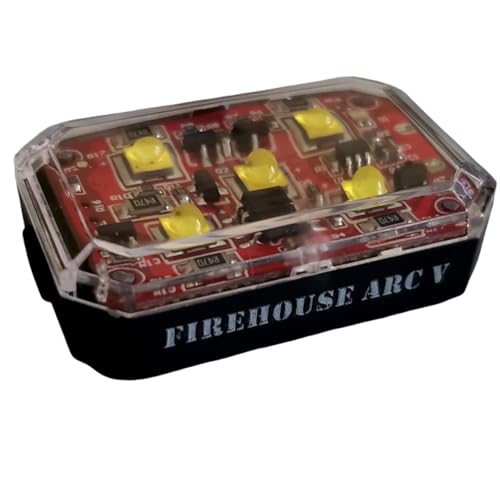
Firehouse Technology ARC V Drone Strobe Anti-Collision Light, 1000 Lumens, White
Enhance your drone's visibility and safety with this powerful strobe light designed for any flying adventure
Product information
Product Review Score
4.22 out of 5 stars
(157 reviews)Product links
The Firehouse Technology ARC V Drone Strobe Anti-Collision Light is aimed at pilots who want a powerful standalone white strobe.
The current FreshStore product data lists a 1000-lumen output, four-statute-mile visibility range, IP67 water resistance, five Cree XPE LEDs and up to six hours of operation in strobe mode.
- Best for: High-visibility applications and larger drone setups.
- Useful features: Strong stated visibility range, weather-resistant construction and onboard rechargeable power.
- Consider: Confirm the final mounting location does not interfere with sensors, GPS or aircraft balance.
3. ULANZI DR-01 — Best Compact Multi-Colour Strobe

ULANZI DR-01 Anti-Collision Strobe Light for Drones
Illuminate your flight and enhance safety with this compact strobe light designed to keep your drone visible in any conditions
Product information
Product Review Score
4.95 out of 5 stars
(186 reviews)Product links
The ULANZI DR-01 Anti-Collision Strobe Light for Drones combines a compact format with red, green and white lighting options.
Current product data lists a built-in 250mAh battery, up to four hours of operation, visibility up to three miles on a clear night and nine lighting modes combining constant, slow-flash and strobe settings.
The green flashing option may be particularly relevant to UK pilots, although the pilot still needs to ensure the finished installation and operation satisfy the applicable rules.
- Best for: Pilots who want one compact unit with multiple colour and flash options.
- Useful features: Red, green and white modes plus a rechargeable battery.
- Consider: Adding any light changes the aircraft's total flying weight.
4. Wireless LED Strobe Light with Remote Control — Best for Flexible Lighting Modes
The Wireless LED Strobe Light with Remote Control gives you considerably more control over colour and lighting style than a simple fixed strobe.
Current product data lists eight colours, ten operating modes and wireless control from up to approximately seven metres. It uses a built-in 110mAh rechargeable battery and offers several mounting options.
- Best for: Pilots who want remotely selectable colours and lighting effects.
- Useful features: Eight colours, multiple flash patterns and remote operation.
- Consider: Treat this primarily as a visibility and creative-lighting option unless you have confirmed that the selected mode meets the regulatory requirement for your flight.
5. VIFLY Drone Strobe Light — Best Lightweight Dedicated Strobe
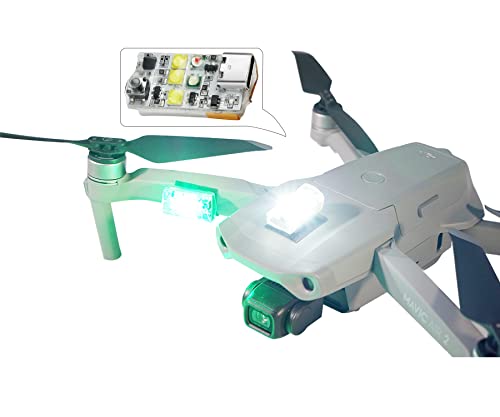
VIFLY Drone Strobe Light for Night Flying
Enhance your nighttime flying experience and ensure visibility with this bright and easy-to-install strobe light
Product information
Product Review Score
4.7 out of 5 stars
(182 reviews)Product links
The VIFLY Drone Strobe Light for Night Flying is a lightweight option designed specifically for fitting to drones.
Current FreshStore product information lists five high-intensity LEDs, a weight of approximately six grams, claimed visibility beyond three miles, a 160mAh battery with up to four hours of operation and 3M Dual Lock mounting.
- Best for: Camera-drone pilots who want to minimise additional weight.
- Useful features: Compact size, rechargeable power and straightforward mounting.
- Consider: Check both the selected lighting mode and the rules governing your particular operation.
6. SpeedyBee RGB LED Strip Set — Best for FPV Visibility and Customisation
The SpeedyBee RGB LED Strip Set for FPV Drone serves a different purpose from a dedicated anti-collision strobe.
It is designed for FPV installations where colour, aircraft orientation and appearance are part of the build. Current store information lists multiple colour options, series connection and support for a range of FPV applications.
- Best for: FPV freestyle and custom builds.
- Useful features: RGB effects and integration into an FPV setup.
- Consider: Decorative or orientation LEDs should not automatically be treated as a substitute for a required anti-collision or green flashing light.
For more general LED-based lighting options, you can also read our drone LED lights guide. This guide focuses more specifically on night-flight visibility and anti-collision considerations.
7. 4PCS LED Strobe Lights with Remote Control — Best Multi-Light Value Option

4PCS LED Strobe Lights with Remote Control
Brighten your aerial adventures with these easy-to-use strobe lights and remote control
Product information
Product Review Score
4.48 out of 5 stars
(171 reviews)Product links
The 4PCS LED Strobe Lights with Remote Control provide four individual lighting units that can be positioned around an aircraft or used for other outdoor applications.
Current store information lists each light at approximately 10 grams, a 110mAh rechargeable battery, remote operation, magnetic and hook-and-loop mounting options and up to 12 hours of use depending on settings.
- Best for: Pilots wanting several lights for improved orientation or coverage.
- Useful features: Four-light package, remote control and flexible mounting.
- Consider: Four separate units can add meaningful weight to a small drone. Calculate the combined aircraft weight before flying.
Anti-Collision Lights vs Decorative Drone LEDs
One of the easiest mistakes to make is assuming that all drone lights perform the same job.
Anti-collision strobes are primarily about making the aircraft conspicuous. Their important characteristics include visibility, flash behaviour, mounting position and reliability.
Orientation lights help the pilot recognise the aircraft's direction. Different colours on the front, rear or sides can make orientation easier to judge.
Decorative RGB LEDs are designed mainly for visual appearance. They can be excellent for FPV builds and photography but should not be assumed to satisfy a regulatory lighting requirement.
Some products can perform more than one role, but the pilot should determine whether the actual configuration meets the requirement that applies to the flight.
Mounting a Drone Strobe Safely
Before flying with a new light, carry out a simple installation check.
- Secure the light firmly so that vibration cannot loosen it.
- Keep it clear of propellers and moving components.
- Do not cover obstacle sensors, GPS antennas or cooling openings.
- Check that the light does not obstruct the camera.
- Confirm that the light remains visible from the required direction.
- Recheck the aircraft's total weight after fitting the light.
- Complete a short controlled test flight before relying on the new setup at night.
For very small drones, even a lightweight accessory can noticeably change handling or push the aircraft above a relevant weight threshold.
Frequently Asked Questions
Do you need lights on a drone at night?
Requirements depend on where and how you fly. In the UK Open Category, an active green flashing light is required for night operation. Under US Part 107, night operations require suitable anti-collision lighting visible for at least three statute miles. US recreational flyers should follow the applicable FAA requirements and recognised CBO night-flying procedures.
What colour light should a drone use at night?
There is no single worldwide answer. UK Open Category night operations require a green flashing light. US Part 107 focuses on anti-collision lighting performance and visibility rather than specifying one universal colour in the rule discussed here.
Does a drone strobe need to be visible for three miles?
For US Part 107 night operations, anti-collision lighting must be visible for at least three statute miles and have a flash rate sufficient to avoid a collision. Do not automatically apply that requirement to every jurisdiction or every recreational flight.
Will a drone light reduce flight time?
Any additional weight can affect aircraft performance, but the amount varies by drone and lighting system. Rather than assuming the effect will be negligible, check the light's weight, complete a controlled test and compare flight behaviour with your normal setup.
Can RGB LED strips replace an anti-collision strobe?
Not automatically. RGB strips are useful for appearance and orientation, but a regulatory anti-collision or green flashing-light requirement should be assessed separately.
Where should I mount a strobe light on my drone?
Choose a secure position where the light remains clearly visible without interfering with propellers, cameras, GPS, obstacle sensors or ventilation. The best position depends on the aircraft and the purpose of the light.
Which Drone Light Should You Choose?
The best choice depends on the aircraft and the job you need the light to perform.
For a dedicated high-visibility strobe, the Lume Cube, Firehouse ARC V and VIFLY options are the most directly focused on anti-collision use. The ULANZI DR-01 provides additional colour flexibility, including green, while remote-controlled and multi-light kits offer more creative and orientation options.
FPV pilots who primarily want visual customisation may prefer an RGB lighting system such as the SpeedyBee strip set, but that should be treated separately from any lighting required by aviation rules.
Whichever option you choose, consider visibility, weight, mounting, battery life and the regulations that apply to your flight rather than selecting a light on brightness alone.
Browse the full range of drone lights available through Best Drones Direct and compare the options that best suit your aircraft and flying style.